
MCP is one of the most important shifts in the agent world because it makes tools, resources, and prompts easier to expose across runtimes. That is the upside. The downside is that the new default instinct becomes 'add another server.' Capability expands. Governance lags. Prompt overhead rises. Tool choice gets noisy. Suddenly the agent stack feels powerful and strangely expensive at the same time.
What to remember
- More MCP servers usually means more complexity before it means more value.
- Tool sprawl increases prompt overhead, decision noise, and operational risk.
- Server count should follow workload design, not curiosity alone.
- The mature pattern is a smaller approved server set with real review.
Editorial judgment
The practical stance: MCP server costs is only useful when it is tied to a named owner, a visible workflow, and an accepted outcome.
Problem to watch
The expensive mistake is treating MCP server costs as a generic spend topic instead of asking which behavior, provider, or workflow created the cost.
How to use this page
Every new MCP server feels like capability, but too many servers create tool overload, prompt overhead, and expensive operational confusion.
Concrete examples
- Every new MCP server feels like capability, but too many servers create tool overload, prompt overhead, and expensive operational confusion.
- A bigger MCP menu often makes the agent slower, noisier, and harder to govern before it makes it smarter.
- Prompt and context overhead
Decision rules
- More MCP servers usually means more complexity before it means more value.
- A bigger MCP menu often makes the agent slower, noisier, and harder to govern before it makes it smarter.
- Higher chance of bad tool choice or unnecessary tool use
Mistakes to avoid
- Do not treat MCP server costs as a generic topic; tie it to a workflow, owner, and budget decision.
- Do not compare provider costs without checking quality, retries, and accepted outcomes.
- Do not publish a cost recommendation that cannot be connected to a concrete next action.
Why MCP sprawl happens so easily
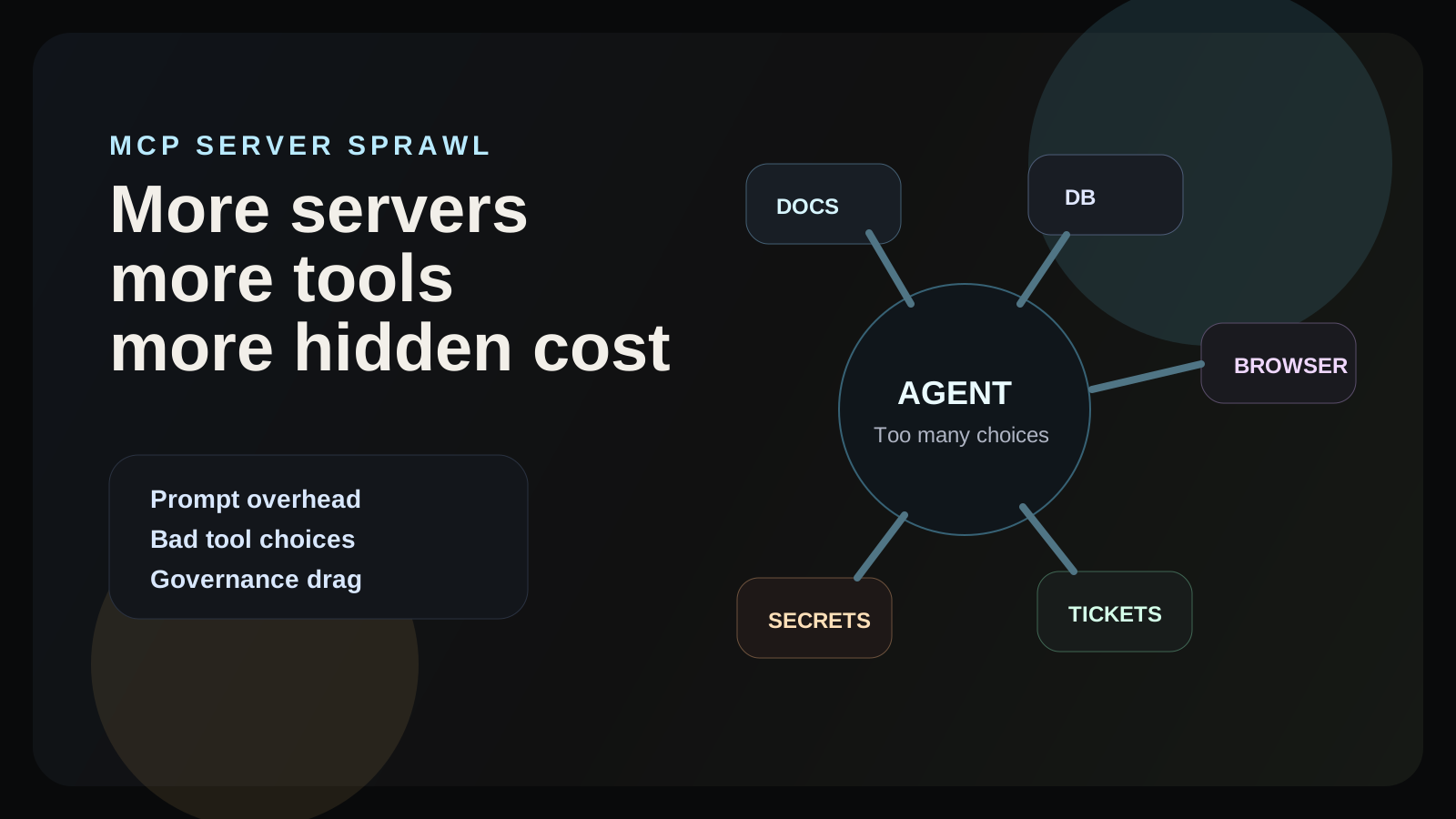
MCP is composable, and composable systems invite accumulation. A new server promises one more power: browser control, databases, tickets, cloud consoles, docs search, secret stores, or internal APIs. Each addition feels individually rational.
The problem is aggregate behavior. More servers mean more tools available to the model, more chances to pick the wrong one, more setup surface to maintain, and more governance work around permissions and trust.
The better policy is smaller, approved, and reviewed
Teams should run a short approved server list per workload class. Coding work needs one set. Ops work needs another. Research work probably needs fewer tools than people think. If a server does not create repeated value, it should not stay in the default stack forever.
That is the real maturity move for MCP: not maximum connection count, but cleaner capability architecture.
Frequently asked questions
Do MCP servers directly increase token cost?
They can, because tools and server context add overhead and often lead to longer, more complex agent reasoning paths.
Is MCP sprawl mainly a security problem or a cost problem?
Both. The same growth in capability surface that raises risk also raises operational and prompt complexity.
What is the first MCP governance rule to add?
Keep an approved server list by workload instead of letting every team keep adding permanent servers by habit.
Agent stacks get more expensive long before they get more disciplined
Spendwall helps teams see how AI systems expand across providers, tools, and workflows so capability growth does not quietly turn into governance debt.